Crypto market crash, how investors can protect capital and buy the dip without panic
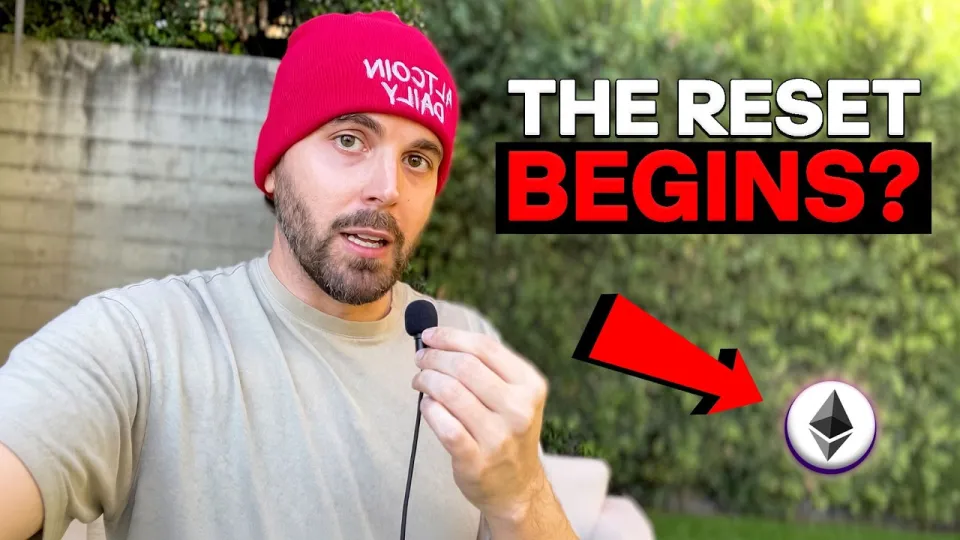
Video: Crypto Investors Are In Serious Trouble (market crash)
Want articles like this for your own video to promote it on YouTube and Google? Order them through the Telegram bot @sat_sit_bot. It writes articles around your video, embeds the video and publishes them on popular niche websites (no ads). Try it free: 50 articles on us.
· based on the channel Altcoin Daily
Key takeaways
- Bitcoin traded near $80,707 on October 24, 2026, with a five-year CAGR of about 5.78%, per a widely shared figure in the comments.
- Altcoin Daily frames the current drawdown as a market crash that has crypto investors in serious trouble.
- The channel's only external link in the video is its merchandise store at altcoindailyshop.myshopify.com.
- Viewers are split between treating the drop as manipulation and treating it as a buying window for dollar-cost averaging.
- Long-term holders in the comments report checking prices less often and holding cash for non-crypto priorities.
A crypto market crash is a sharp, correlated drawdown across Bitcoin, Ethereum and altcoins that forces leveraged holders to sell and leaves long-term investors deciding whether to add or wait. The practical answer for most investors is to avoid forced selling first, then average into positions in tranches with money that is not needed for near-term expenses. Altcoin Daily's breakdown of the current slump, and the reaction in its comments, shows how differently holders are reading the same red candles; the channel also points viewers to its Altcoin Daily merch store for branded gear.
What the crypto crash looks like in numbers
The scale of the drawdown matters less than the return investors actually earned, and on that measure the picture is uncomfortable. A figure circulating among viewers puts Bitcoin at $80,707 on October 24, 2026, which implies a five-year compound annual growth rate of roughly 5.78% — barely better than a savings account and far below the triple-digit annualized returns of earlier cycles.
That single number explains much of the anxiety. A holder who bought near a previous peak and sat through two years of sideways-to-down price action has not been compensated for the volatility. Bitcoin's pattern of lower highs within a cycle, while still printing higher highs across cycles, is exactly what one viewer asks about — and it is the same question Ethereum holders raise, since ETH has not matched Bitcoin's cycle-to-cycle highs.
Key reference points from the discussion:
- Bitcoin near $80,707 as of October 24, 2026, per the comment section figure.
- Five-year CAGR of about 5.78% at that price.
- A widely repeated viewer target of $1,000 per SOL by 2028, which implies a large multiple from current levels.
- Altcoin Daily's framing of the episode as investors being "in serious trouble," not as a routine pullback.
Why a crash hits crypto portfolios harder than stock portfolios
Crypto drawdowns amplify losses because leverage, thin liquidity and 24/7 trading remove the circuit breakers that equity markets rely on. When margin positions are liquidated, the selling is mechanical: exchanges close undercollateralized accounts, market makers widen spreads, and prices gap through levels where buyers had placed bids.
Three structural factors make this worse in crypto than in stocks:
- Leverage is easy to obtain and hard to monitor, so a 20% move can wipe out a 5x position entirely.
- Correlations go to one during stress — altcoins fall with Bitcoin, so diversification inside crypto offers little protection.
- Sentiment moves faster than fundamentals, which is why some viewers describe the drop as manipulation rather than a change in the asset's value.
The practical consequence is that position sizing, not prediction, determines who survives a crash. A portfolio that can fall 50% without forcing a sale is a portfolio that can wait for recovery.
How to average down without blowing up your position
Averaging down works only when it is planned in advance, sized in tranches and funded with money you will not need for at least a few years. Buying blindly on every red day turns a correction into a liquidity problem.
A workable process:
- Decide the total amount you are willing to add during the drawdown before prices move further.
- Split it into three to five tranches tied to price levels or dates, not to headlines.
- Keep a reserve for a deeper drop, since crashes rarely end at the first support level.
- Write down the plan and the reasons for each tranche so you can review decisions later instead of reacting in the moment.
- Avoid adding leverage to a losing position; that is how small losses become account-ending ones.
Viewers in the comments describe exactly this behavior — holding, buying more on dips, and treating a crash as extra time to accumulate. Others say they have stopped checking prices daily because their horizon is long and their cash is earmarked for other priorities, such as making their living situation more comfortable. Both approaches are consistent: the decision is made once, in calm conditions, and then followed.
Questions crypto investors are actually asking right now
Beyond price targets, the recurring questions in the discussion are about process and about the people who run the analysis. Viewers want to know whether the channel will still be around next cycle or whether the hosts plan to step back after this bull market completes, and they want the hosts' actual altcoin holdings rather than general commentary.
Other threads worth noting:
- Whether Ethereum treasury companies would ever start selling ETH, and what conditions would trigger that — a question aimed at fund manager Tom Lee.
- What Tom Lee thinks about SOL specifically, given the $1,000-by-2028 target floating around.
- Whether regulatory changes will really reduce the number of rules, and whether that matters to price at all.
- Whether the current move is a genuine crash or ordinary market manipulation.
These are not idle questions. Each one maps to a real risk: manager behavior, treasury selling pressure, altcoin selection and regulatory uncertainty. Investors who answer them for themselves — rather than waiting for a definitive call — are better prepared for the next leg in either direction.
What long-term holders are doing differently
The most consistent behavior among experienced holders is to separate the price chart from the plan, checking portfolios less often and keeping dry powder for the moments that matter. One viewer notes they have not logged in for two weeks, are saving cash for something else, and are considering equities rather than adding crypto right now.
That is a legitimate response to a crash. Not every drawdown requires action, and doing nothing is a position. The holders who get hurt are usually the ones who sell at the bottom to stop the pain, or who buy with borrowed money at the top because the trend felt safe.
A few habits that show up repeatedly:
- Hold the core position and add only with surplus cash.
- Keep a separate reserve for non-crypto goals so a crash never becomes a personal financial emergency.
- Reassess the thesis on a schedule — quarterly, not hourly.
- Treat extreme sentiment, in either direction, as a signal to slow down rather than to act.
Where to find Altcoin Daily's links and merch
Altcoin Daily's video description carries a single external link: the channel's merchandise store. Everything else in the episode is commentary, so readers looking for the shop can use the URL directly.
- Altcoin Daily merch store: https://altcoindailyshop.myshopify.com
The bottom line on this crypto crash
A crash is a stress test of position sizing and temperament, not a verdict on the asset class. Bitcoin near $80,707 with a five-year CAGR of about 5.78% is a genuinely weak return for the risk taken, and that fact deserves a real answer in your portfolio plan rather than a slogan. Decide in advance how much you will add, in how many tranches, and with what money; then let the market do what it will. If you want to support the channel that framed this discussion, Altcoin Daily's merch store is the link from the video.
Questions & answers
Is this actually a crypto market crash or just normal volatility?
It depends on your time frame. A drop of this size is a crash for anyone using leverage or holding short-term positions, while long-term holders may see it as a standard drawdown within a cycle. The practical test is whether the move forces you to sell; if it does not, you can treat it as volatility and follow a pre-set buying plan.
Should I average down during a crypto crash?
Only with money you will not need for several years and only in planned tranches. Split the amount into three to five parts, keep a reserve for a deeper drop, and never add leverage to a losing position. Averaging down reduces your average entry price but increases exposure, so size it deliberately.
What does a 5.78% five-year CAGR for Bitcoin mean for investors?
It means that at a price near $80,707, Bitcoin's five-year annualized return is roughly in line with conservative instruments, despite far higher volatility. That does not predict the next five years, but it is a reminder that entry price and holding period drive returns more than narratives do.
Will the channel and its hosts still be around next cycle?
Viewers have asked exactly that, along with requests for the hosts' actual altcoin holdings and their views on SOL and on Ethereum treasury selling. There is no confirmed answer in the episode, so treat any long-term commitment from a media channel as uncertain and rely on your own research process.
Source: Crypto Investors Are In Serious Trouble (market crash) · Markdown version